Key takeaways:
- Artemis II's Orion spacecraft entered the lunar sphere of influence at 12:41 a.m. ET Monday, the first time since Apollo 17 in 1972.
- The crew will conduct a lunar flyby on Monday, reaching 252,760 miles from Earth and surpassing the Apollo 13 distance record.
- Astronauts will observe and photograph the Orientale and Hertzsprung basins, capturing images of lunar regions never seen by humans before.
NASA’s Artemis II mission has reached a key milestone as its Orion spacecraft entered the lunar sphere of influence early Monday, marking the point where the moon’s gravitational pull surpasses Earth’s. The crew—astronauts Reid Wiseman, Christina Koch, Victor Glover, and Canadian astronaut Jeremy Hansen—crossed this boundary at approximately 12:41 a.m. ET, the first time humans have done so since Apollo 17 in 1972.
NASA flight director Rick Henfling called the event “a significant milestone on our mission.” The lunar sphere of influence is a mathematical boundary indicating the spacecraft’s proximity to the moon rather than a physical border.
On Sunday, the astronauts sent back a striking photo showing Earth as a distant crescent framed by the Orion capsule’s window, offering “one last look at Earth before we reach the Moon.” The crew began their day with a wake-up message from Apollo 16 astronaut Charlie Duke, who recalled landing on the moon in 1972 in a lunar module named Orion. “I’m glad to see a different kind of Orion helping return humans to the moon as America charts the course to the lunar surface,” Duke said.
The astronauts spent Sunday testing their newly designed orange spacesuits, which provide a breathable atmosphere for up to six days in emergencies. The Orion spacecraft also performed a 14-second engine burn to maintain its trajectory, the first correction maneuver needed since leaving Earth’s orbit. Henfling noted the spacecraft had been on a “pinpoint trajectory,” eliminating the need for earlier planned corrections.
Later Monday, the crew will swing around the moon, reaching an estimated distance of 252,760 miles from Earth—surpassing the Apollo 13 record of 248,655 miles and becoming the farthest humans have traveled from our planet. During the roughly seven-hour lunar flyby starting at 2:45 p.m. ET, the astronauts will observe and photograph parts of the moon’s surface never before seen by human eyes.
NASA will provide live coverage beginning at 1 p.m. ET. At closest approach, around 7 p.m. ET, the Orion spacecraft will be approximately 4,070 miles from the lunar surface. The crew will use two Nikon D5 cameras and a Nikon Z9 camera to capture images.
Among the 30 scientific targets, the astronauts will focus on the Orientale basin, a 3.8 billion-year-old, nearly 600-mile-wide crater that spans the moon’s near and far sides. This basin, formed by a massive impact, still displays distinct geological features. They will also study the Hertzsprung basin on the moon’s far side, a 400-mile-wide crater whose features have been degraded by later impacts. Comparing these sites will help scientists understand how the moon’s topography evolves over time.
Kelsey Young, Artemis II lunar science lead, described the schedule as “jam-packed” but emphasized flexibility for the astronauts to deviate if observations warrant. “They are the field scientists, and they are encouraged to go off-book if what they’re seeing in front of them really compels them,” she said.
Near the end of their observation period, the crew will witness a roughly hourlong solar eclipse from space, beginning at 8:35 p.m. ET, when the sun will pass behind the moon from Orion’s perspective. This will darken the moon and allow the astronauts to observe the sun’s corona and look for flashes from meteoroid impacts on the lunar surface. They may also photograph visible planets such as Mercury, Venus, Mars, and Saturn.
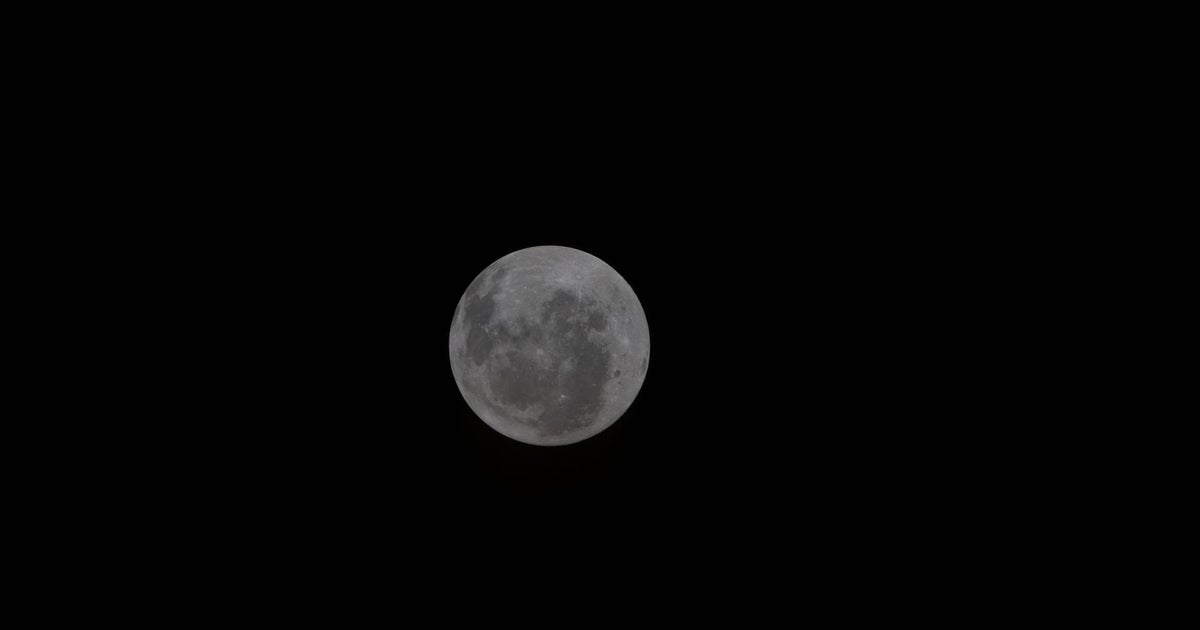
On Saturday, the crew captured a new photo of the moon’s far side, released by NASA on Sunday. The image shows the moon oriented upside down with its South Pole at the top and includes the Orientale basin along the right edge. This marks the first time humans have seen the basin in full.
NASA Administrator Jared Isaacman highlighted the mission’s primary goal as gathering data and conducting lunar observations to prepare for Artemis III, scheduled for next year. “Learning as much as we can about Orion is critically important,” he said.
The Artemis II mission launched last week from Cape Canaveral, Florida, representing the first crewed lunar mission since the Apollo program over 50 years ago. The crew continues to test spacecraft systems and conduct scientific observations as they approach the moon.




Be First to Comment