Key takeaways:
- The second crew member of the downed F-15E was rescued by U.S. forces after a complex operation involving hundreds of special forces and dozens of aircraft.
- The CIA conducted a deception campaign inside Iran to confuse Iranian forces and locate the missing airman, who was hiding in a mountain crevice armed only with a handgun.
- No U.S. personnel were killed or wounded during the rescue operations, and the injured airman was flown to Kuwait for medical treatment.
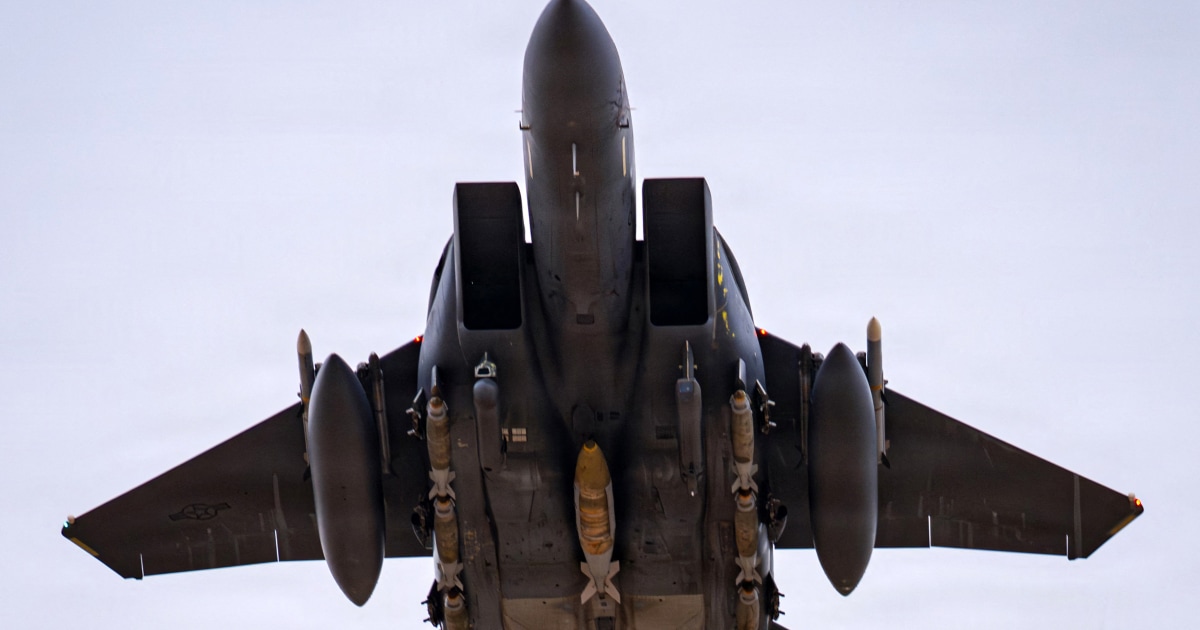
U.S. forces successfully rescued the second crew member of an F-15E fighter jet shot down over Iran on Friday, President Donald Trump announced Sunday. The rescue operation, described by Trump as one of the most daring in U.S. history, brought to safety a highly respected colonel who sustained injuries but is expected to recover fully.
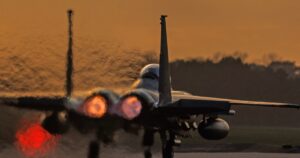
The F-15E, a two-seat strike fighter, was downed by Iranian Revolutionary Guard forces in southwestern Iran, marking the first time a U.S. fighter jet has been shot down in combat in over two decades. The pilot was rescued shortly after the crash, but the weapons systems officer remained missing until the complex recovery mission early Sunday.
According to U.S. officials, the rescue involved hundreds of special forces personnel, several dozen warplanes, and helicopters. A firefight broke out with Iranian troops during the operation, but there were no U.S. casualties. The rescued officer was flown to Kuwait for medical treatment.
The CIA played a critical role in the mission, launching a deception campaign inside Iran to confuse Iranian forces by spreading false information that the airman had already been located and was being moved out of the country. This subterfuge allowed the agency to track the missing crew member, who was hiding in a mountain crevice armed only with a handgun.
President Trump credited the military leaders and the CIA for their precision and boldness, stating that dozens of aircraft equipped with lethal weapons were deployed at his direction. He emphasized that no Americans were killed or wounded during either rescue operation, underscoring what he called “overwhelming Air Dominance and Superiority over the Iranian skies.”
The downing of the F-15E occurred amid escalating conflict between the U.S. and Iran, with the Strait of Hormuz—a critical global oil shipping route—virtually closed, causing worldwide fuel price increases. Trump had issued a 48-hour ultimatum to Iran to reopen the strait, warning of severe consequences.
During the initial search, a U.S. helicopter evacuating the rescued pilot came under small arms fire but landed safely. An A-10 Thunderbolt Warthog aircraft supporting the mission was also hit and damaged; its pilot ejected over Kuwaiti airspace and was recovered unharmed.
Iranian media and officials claimed credit for shooting down the F-15E, with the Islamic Revolutionary Guard Corps stating the jet was destroyed by an advanced air defense system. Iranian provincial officials denied reports that the second crew member had been captured, calling such claims enemy tactics.
The rescue mission’s success highlights the capabilities of U.S. Air Force Pararescuemen and special operations forces, who are trained and equipped for such high-risk recoveries. The missing crew member was believed to have had first-aid supplies, communication gear, and a GPS beacon to aid in his survival and location.
The incident marks a significant moment in the ongoing conflict, dispelling notions of complete U.S. control over Iranian airspace and demonstrating the risks faced by American forces operating in the region.


Be First to Comment