Key takeaways:
- The U.S. has deployed over 850 Tomahawk cruise missiles against Iran, using them at a rate nine times higher than its annual procurement of about 90 missiles, with an inventory of roughly 3,100 missiles.
- Iran continues daily missile and drone attacks on Gulf neighbors and Israel, targeting military and energy infrastructure, causing significant damage despite high interception rates by regional air defenses.
- Regional defenses have intercepted most Iranian projectiles, but debris still causes civilian casualties and damage, impacting critical oil and gas facilities and threatening regional stability and global energy markets.
The United States has deployed hundreds of Tomahawk cruise missiles in its ongoing conflict with Iran, using the weapons at a rate significantly exceeding annual procurement levels. According to sources familiar with the matter, more than 850 Tomahawks have been expended since the conflict escalated, a figure roughly nine times the number the Pentagon typically acquires each year. The Pentagon’s inventory is estimated at about 3,100 missiles, but the current procurement rate stands at approximately 90 missiles annually, far below the pace of usage in the conflict.
Tomahawk missiles, launched primarily from Navy destroyers and submarines, are long-range precision weapons capable of striking targets over 1,000 miles away with high accuracy. Developed during the Cold War and continuously upgraded, they have become a cornerstone of U.S. military strikes in various conflicts, including recent operations against Iran. The missiles cost around $2.2 million each, with launchers for ground-based versions costing over $6 million. Raytheon, the primary manufacturer, has announced plans to increase production to more than 1,000 missiles annually over several years, though this expansion will not immediately meet wartime demand.
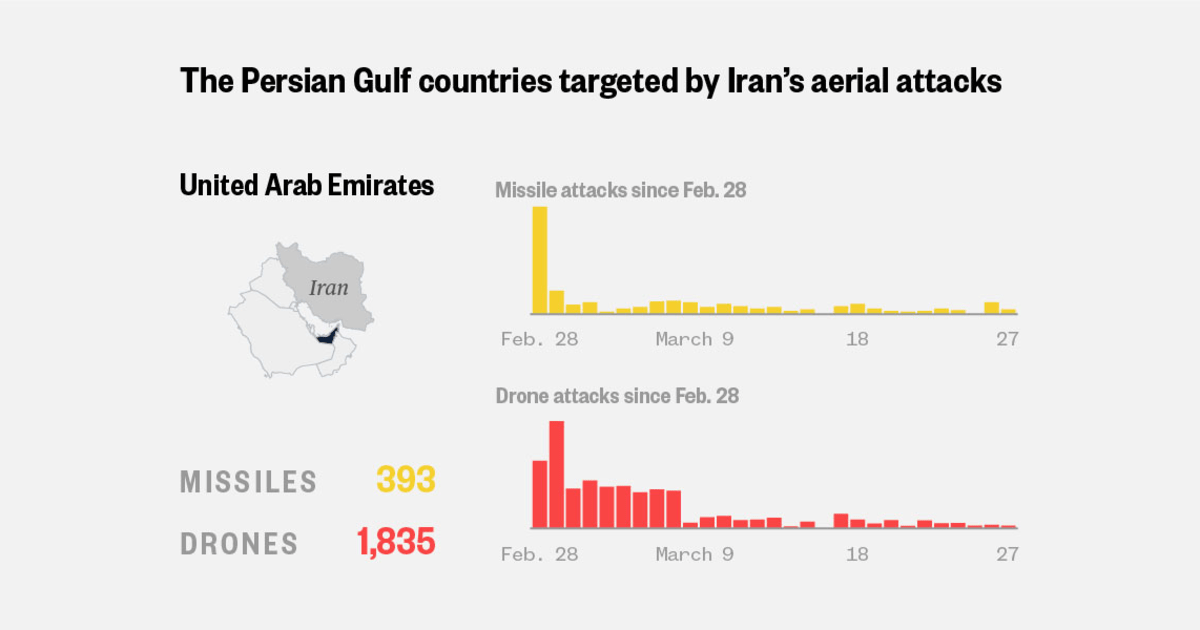
Despite the intensity of the U.S.-Israeli air campaign targeting Iran, Tehran continues to launch daily missile and drone attacks against Gulf neighbors and Israel. Since the conflict began, Iran has maintained a steady stream of assaults on military bases, energy infrastructure, airports, and ports across the region. While the number of projectiles fired has decreased from the initial days of the war, Iran reportedly launches fewer than 25 ballistic missiles and around 80 drones daily. These attacks have caused significant damage, including the closure of the strategic Strait of Hormuz, and have inflicted casualties and economic losses.
Regional air defenses have intercepted a high percentage of Iranian projectiles, with the United Arab Emirates reporting a 92% interception rate for ballistic missiles and 94% for drones in the early days of the conflict. Kuwait has claimed to have destroyed or deflected all missiles fired at its territory since late February. Nevertheless, debris from intercepted missiles and drones has still resulted in civilian casualties and damage to critical energy facilities. Iranian strikes have targeted key oil and gas infrastructure in Saudi Arabia, Bahrain, Kuwait, the UAE, and Iraq, with some attacks causing multi-billion-dollar losses. Israel has also faced hundreds of missile attacks, though it has not disclosed detailed interception data. The ongoing conflict continues to pose challenges for regional stability and global energy markets.




Be First to Comment